
Inert Gas Fire Suppression Systems for Data Centers
Inert Gas Fire Suppression Systems for Data Centers
The National Fire Protection Association’s (NFPA) standard for clean agent fire suppression systems, known as NFPA 2001, provides comprehensive guidelines for the use of inert gas-based systems in data centers and other critical facilities. Inert gas fire suppression systems are recognized for their safety in occupied spaces, making them a preferred alternative to traditional systems that use water or chemical agents. These systems employ a blend of gases—typically nitrogen, argon, and carbon dioxide—to effectively suppress fires. These gases are non-toxic and residue-free, ensuring the safety of both personnel and equipment.
One of the primary advantages of inert gas-based fire suppression systems is their rapid and efficient fire suppression capability. The gases are released swiftly, flooding the protected space and reducing the oxygen levels to a point where combustion cannot be sustained. This quick response not only halts the spread of fire but also minimizes potential damage to IT assets, thereby reducing downtime and ensuring business continuity.
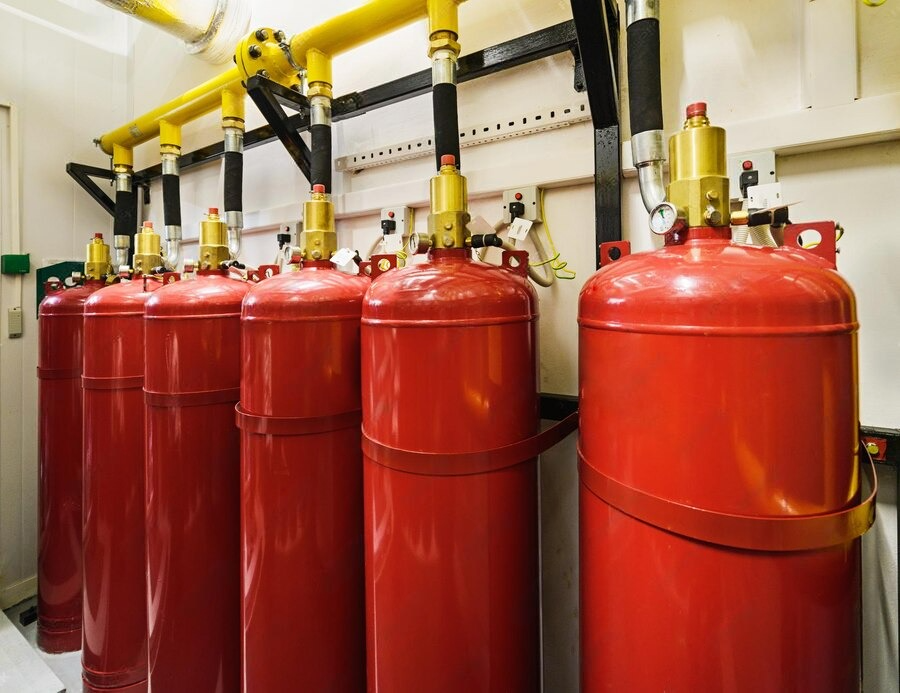
In contrast to traditional suppression methods like water or foam, which can leave behind damaging residue, inert gas systems require minimal cleanup post-activation. This characteristic is particularly valuable in data centers, where sensitive electronic equipment can be easily compromised by residual chemicals or moisture.
International standards play a critical role in the design, installation, and maintenance of these systems. The two most important standards governing the use of inert gas-based fire suppression systems in data centers are NFPA 2001 and ISO 14520. NFPA 2001 outlines the guidelines for clean agent fire suppression systems, ensuring they effectively suppress fires while minimizing damage to equipment and the environment. ISO 14520 is the international standard for gaseous fire-extinguishing systems, offering similar guidelines to ensure these systems are both effective and safe for use in critical facilities like data centers.
To ensure the effectiveness of an inert gas fire suppression system, it is essential to conduct a thorough fire hazard assessment, select the appropriate gas, ensure room integrity, design an effective piping network, consider gas storage requirements, and implement a robust alarm and control system. These factors are vital in safeguarding the protected space against fire.
One prominent solution in the market is the HD Inertsys inert gas fire suppression system, offered by HD Fire Protect. This system is designed to rapidly extinguish fires in areas where water-based suppression systems may not be practical or effective. The HD Inertsys system uses a combination of argon, nitrogen, and CO2 gases, stored in high-pressure cylinders (200/300 bar) and released through a well-designed network of piping and discharge nozzles. A key feature of the HD Inertsys system is its ability to suppress fires quickly while minimizing damage to the protected space and its contents. The system is effective against Class A, B, and C combustibles, including electrical fires.
Environmentally friendly, the HD Inertsys system boasts zero ozone depletion potential and zero global warming potential. It is also safe for use in occupied spaces, leaving no residue and causing no harm to IT assets. The system is available in various sizes and configurations, making it suitable for a wide range of applications, from small server rooms to large IT data centers and industrial facilities. The HD Inertsys system is designed and manufactured with VdS Approval, ensuring high quality and reliability.
Overall, the HD Inertsys inert gas fire suppression system is a dependable and effective solution for protecting critical assets from fire. It has been widely adopted across various industries worldwide, thanks to its robust design, environmental safety, and proven performance in safeguarding data centers and other critical facilities.